When Your Apartment Has No Room Left
Australian cities are getting denser. Apartments are getting smaller. And life events that require extra space (renovations, new arrivals, downsizing, property staging) do not wait for you to find a bigger home. Mobile storage bridges the gap between the space you have and the space you need.
Key Takeaways
Mobile storage delivers a container to your door, you load (or Kent loads for you), and the container is stored in a secure facility until you need it back
Three tiers available: DIY self-load from $149/month, loading service with a professional crew, and full pack-and-load for a hands-free solution
Apartment dwellers without a driveway can arrange delivery to a building loading dock, nearby street with a parking permit, or a ground-floor common area (building manager approval required)
Flexible terms with no minimum lock-in suit short-term renovation storage, between-lease gaps, and long-term decluttering
Managed mobile storage can cost up to 50% less than equivalent self-storage because containerised warehousing uses space more efficiently
Why do apartment dwellers need storage differently?
If you live in a house with a garage, shed, and spare room, storage is something you do at home. If you live in a two-bedroom apartment with one wardrobe and no garage, storage is something that needs to happen somewhere else. The question is how to get your belongings from a 12th-floor apartment to a secure facility without spending your weekend driving back and forth to a self-storage unit.
Common apartment storage scenarios
Scenario | Why Storage Is Needed | Best Option |
Apartment renovation | Furniture and belongings need to be cleared for 2-6 months while work is completed | Mobile storage with loading service (crew removes items from apartment) |
Between-lease gap | Your current lease ends before your next one starts, leaving days or weeks without a home for your belongings | DIY mobile storage or managed storage depending on volume |
Decluttering for sale | Removing excess furniture to stage the apartment for open inspections and photography | Mobile storage or loading service for fast turnaround |
New baby or family change | The study becomes a nursery; where does the desk, bookshelf, and filing cabinet go? | DIY mobile storage for items you may need back within months |
Downsizing | Moving from a house to an apartment means not everything fits; you need time to decide what stays | Managed storage for items you want protected long-term |
Seasonal items | Ski gear, camping equipment, holiday decorations, and bicycles take up precious apartment space | DIY mobile storage for rotate-in, rotate-out access |
How does mobile storage work for apartments?
The standard mobile storage process involves three steps: deliver, load, store. But apartment buildings add a fourth consideration: access. Here is how it works when you do not have a driveway.
Step-by-step for apartment mobile storage
Arrange building access. Contact your building manager to confirm loading dock availability, container delivery timing, and any vehicle size restrictions. If there is no dock, a parking permit for a nearby street position may be required
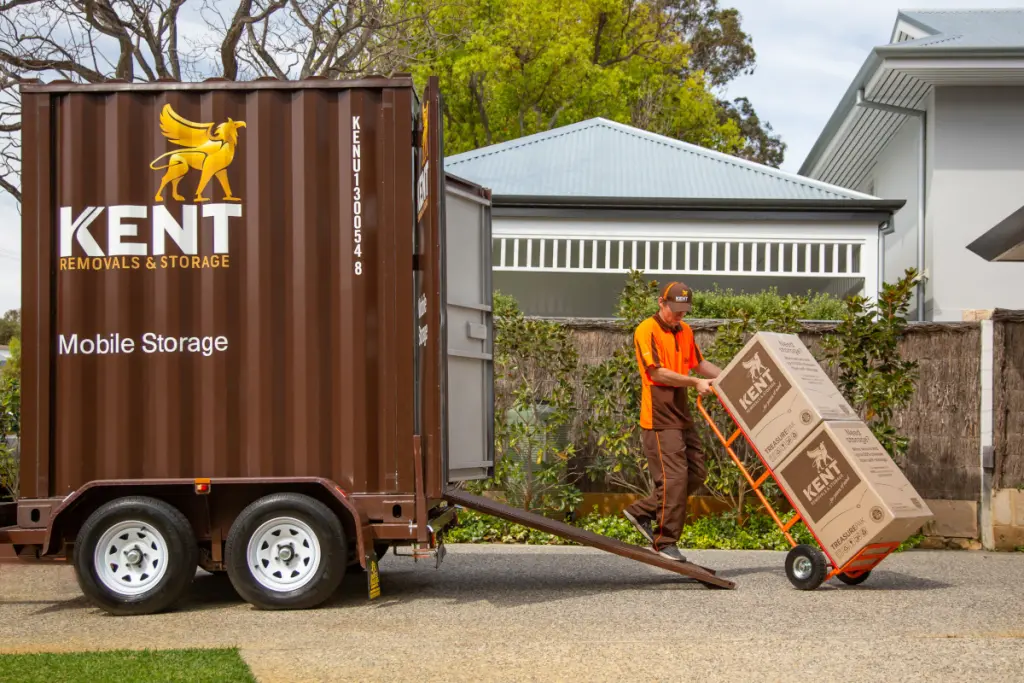
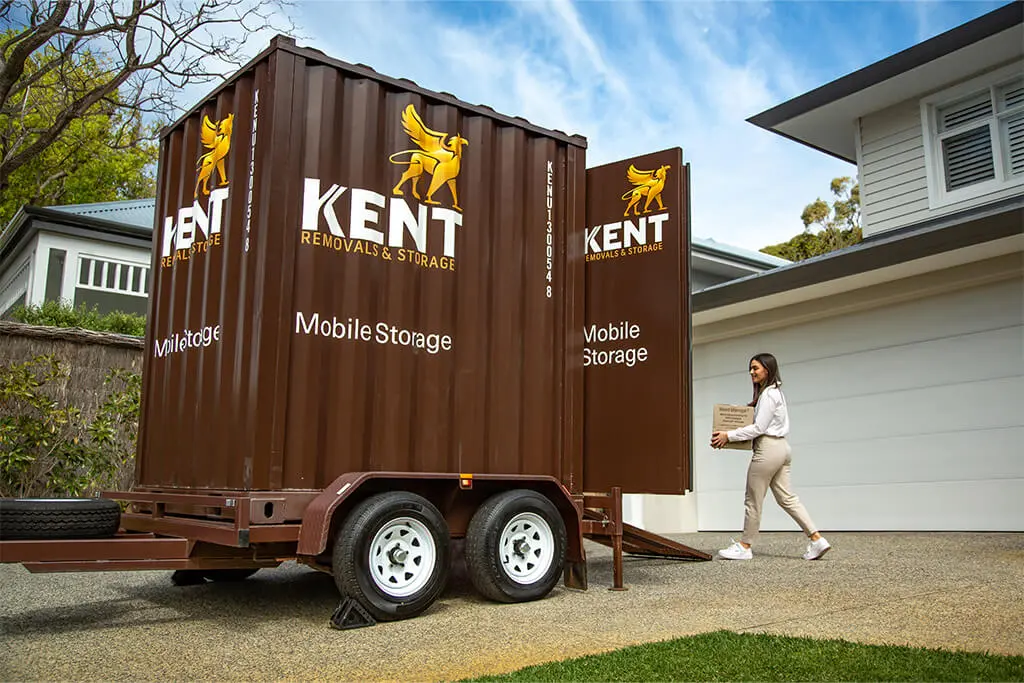
Container delivered. An 8 cubic metre container arrives at the agreed location. For apartments, the container may remain on the truck during loading rather than being placed on the ground
Load the container. You load yourself (DIY tier), or a professional crew carries items from your apartment to the container (loading service and pack-and-load tiers). The crew handles stairs, lifts, corridor distances, and protection
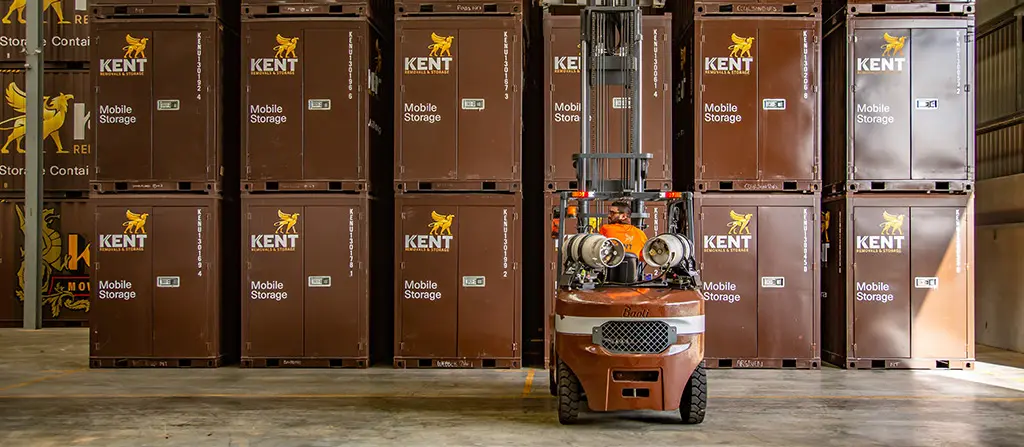
Container collected and stored. The loaded container is transported to a secure, climatised facility with 24/7 CCTV, back-to-base alarms, and fire monitoring
Redelivery when you are ready. Request your container back to any address in Australia. Redeliver the whole container or request specific items be pulled and sent separately
Visit mobile storage for full details on the three tiers and pricing.